
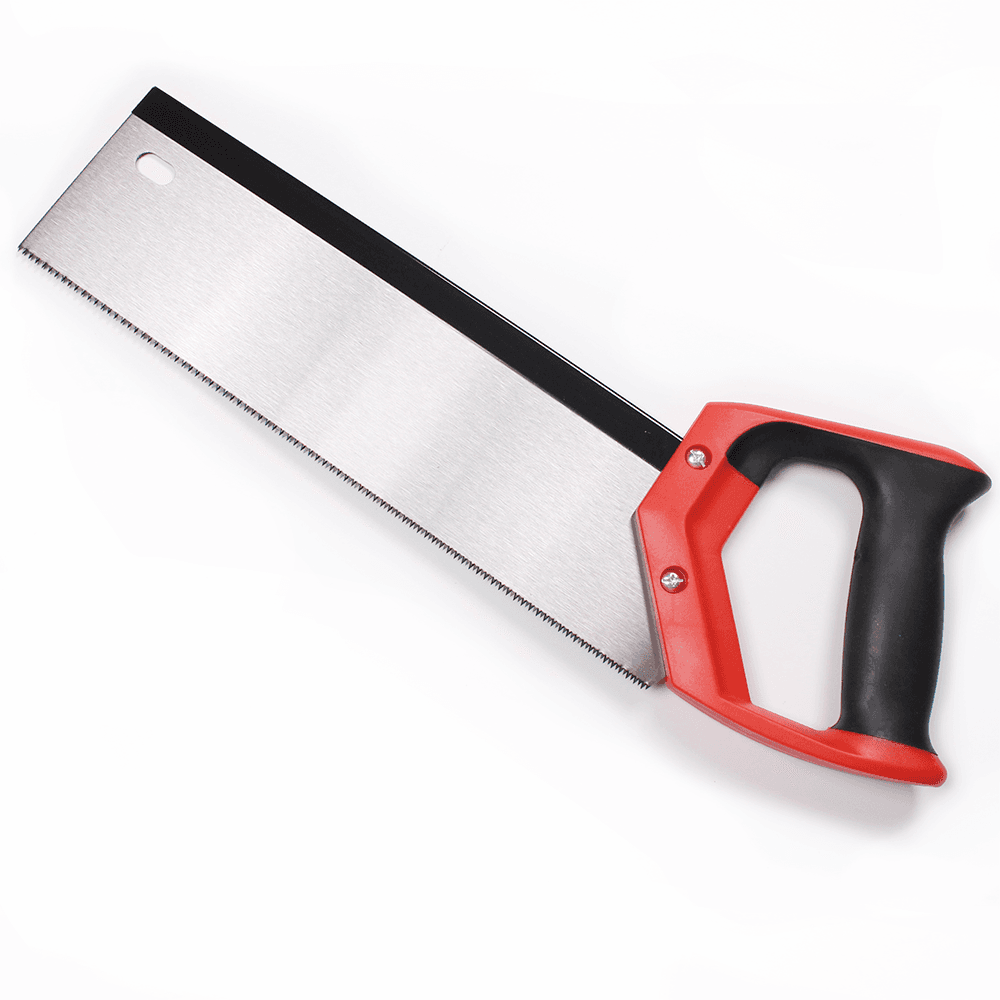
C-3019 Back Saw
Besprechen Sie Spezifikationen, Mengen und Verpackungsanforderungen mit unserem Team.
Verfügbare Varianten
Zwischensumme:
Produktdetails
C-3019 Back Saw Overview
The C-3019 Back Saw is a manual cutting tool designed to solve a simple but important workshop problem: making controlled straight cuts in wood and similar soft-to-medium materials without relying on power tools. For DIY carpentry, home repair, and small workshop tasks, a back saw gives the user direct control over the cut line, especially when trimming boards, cutting lumber, or handling repeatable hand-cut operations where speed is less important than accuracy.
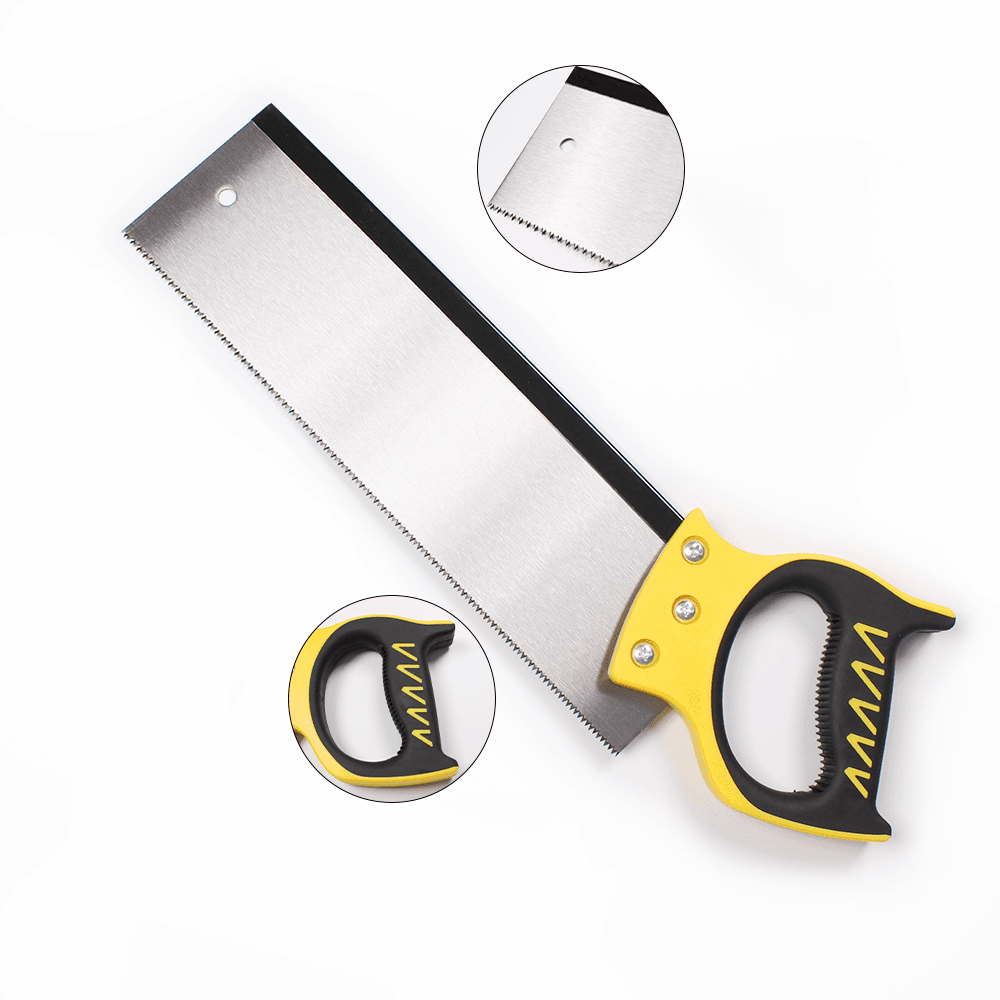
From the visible structure, this saw combines a rigid straight blade, a fine tooth row along one edge, and a black spine along the top edge to help stabilize the blade during use. The yellow-and-black ergonomic handle provides a secure grip, while the closed guard shape and visible fasteners suggest a practical, assembly-based construction suited to regular manual work. For buyers comparing hand saw options, the key value is straightforward: a tool that is easy to store, easy to control, and appropriate for everyday cutting tasks where a compact, dependable saw is needed.
Product Structure and Visible Features
The C-3019 Back Saw has a long rectangular metal blade with a pointed front end and a fine serrated cutting edge on one side. The tooth line is visible and appears closely spaced, which is commonly associated with cleaner, more controlled hand cutting rather than aggressive stock removal. A hanging hole near the blade end adds a practical storage option for walls, hooks, or retail display boards.
The handle is a yellow-and-black molded style with a finger guard and textured grip areas. Three visible fasteners secure the handle to the blade, which is a useful sign for buyers who prefer a mechanically fastened tool rather than a purely decorative shell. The black spine or back strip along the top edge helps define the saw’s profile and reinforces the traditional back-saw format. Based on the visible product, the tool appears built for stable handling and straightforward manual operation.
Key visible characteristics
Fine-tooth blade edge for controlled cutting
Rigid straight blade profile
Closed ergonomic grip for better control
Three visible handle fasteners
Hanging hole for storage or display
Specifications and Capabilities
Some exact specifications are not visible and should not be assumed, including blade length, tooth count, blade thickness, steel grade, hardness, and coating type. What can be verified is the overall hand-saw geometry and functional layout. The blade is straight, narrow, and intended for manual push-pull cutting motions. The fine serrations suggest suitability for cleaner cuts on wood and related materials rather than rough demolition work.
As a buyer reference, this type of saw is generally chosen when the operator needs more control than a power saw can offer, or when the task is too small to justify powered equipment. It fits in tool kits, repair carts, home workshops, and retail shelves where compactness and ease of use matter. The shape of the saw also supports one-handed use for light tasks, while the guarded handle may improve comfort during longer sessions.
Materials and Finish Options
Based on the visible finish, the blade appears to be polished or brushed metal, likely steel or stainless steel, with a matte-satin look. The exact alloy is not visible, so it should not be claimed. The saw may have a finish that helps with appearance and handling, but any specific anti-rust performance would need confirmation from the manufacturer.
The handle looks like molded plastic with black grip areas and yellow body/guard sections. The surface appears textured for traction, and the black portions may be rubberized overmold or a hard plastic grip component. Since the internal construction is not exposed, it is best described as a molded ergonomic handle assembly rather than a fully specified material system. For procurement teams, the practical point is that the visible finish supports easy cleaning, clear visibility, and a familiar tool feel in general workshop use.
Manufacturing Process
The visible build strongly suggests a common industrial manufacturing route: the blade is likely stamped or cut from sheet metal, then ground and sharpened along the tooth edge. After shaping, the blade would typically be set and finished before assembly. The handle appears to be injection molded, then attached to the blade with mechanical fasteners such as screws or rivets.
This type of construction is often selected because it balances cost, repeatability, and serviceability. The blade geometry can be produced consistently, while the handle can be molded for grip shape and visual identification. Although the exact process details are not supplied, the overall format is easy to inspect and understand, which matters for buyers sourcing hand tools for routine use.
Typical Applications
The C-3019 Back Saw is suitable for a range of manual cutting tasks where precision and control are more important than cutting volume. Common use cases include DIY carpentry, trimming boards, cutting lumber to size, home maintenance, and general woodworking. It can also be useful in small workshops where workers need a reliable hand tool for occasional cuts without setting up machines.
In practical terms, buyers often use a saw of this type for fitting pieces during repair work, adjusting framing components, trimming lightweight stock, and handling simple on-site tasks. Because the blade is fine-toothed and manually operated, it is typically better suited to measured cuts than to rough, fast material removal. If the work area is small, portable, or shared, a back saw also offers the advantage of being easy to carry and store.
Quality Control Considerations
For a hand saw like this, useful quality checks are straightforward and visible. Buyers should look at blade straightness, tooth consistency, secure fastening between handle and blade, and the general feel of the grip. A well-made saw should not show obvious warping, loose hardware, or uneven tooth spacing. The hanging hole should be cleanly formed, and the grip surfaces should be free from sharp molding seams that could affect comfort.
Since detailed performance data is not provided, buyers should base their evaluation on practical inspection and intended use. For example, a fine-tooth hand saw will not replace a power saw, but it may be a better choice for controlled handheld cuts in a home or workshop environment. In procurement, consistency of assembly and visible finish often matters as much as raw material claims.
Customization and Buyer Selection Guidance
If this type of product is being sourced for retail, tool kits, or industrial supply, buyers usually compare a few core factors. Handle color is useful for brand identity and shelf visibility. Grip texture affects user comfort. Blade finish may influence appearance and perceived durability. If the saw is to be included in a broader product line, packaging and hanging-hole placement can also matter for merchandising.
Before selecting a saw specification, define the target use case. A general-purpose hand saw for household maintenance may prioritize ease of use and cost efficiency. A workshop-oriented version may focus more on balance, grip comfort, and blade stability. Because the blade dimensions and tooth count are not provided, buyers should confirm those points directly before ordering for a specific cutting task. It is also wise to ask whether the saw is intended mainly for wood, plastic, or mixed light-duty materials.
Questions to confirm before purchase
What is the blade length?
What is the tooth count or tooth spacing?
Is the blade optimized for wood, plastic, or general use?
What material is the handle made from?
Is the blade coated or treated for corrosion resistance?
Are replacement parts available, or is it a fixed assembly?
Why Buyers Choose This Format
The back-saw format is popular because it offers a familiar balance of control, portability, and simplicity. There is no battery, motor, or charging requirement. The tool is ready when needed and easy to store afterward. For many buyers, that simplicity is a real operational advantage. In maintenance work, small joinery tasks, and household repairs, the operator may only need a few accurate cuts. A compact manual saw can be a practical answer in those situations.
The ergonomic handle and enclosed grip shape are especially relevant for users who want better hand placement and a more secure hold. The visible fasteners suggest a durable assembly approach, while the fine teeth indicate a cutting style suited to cleaner manual work. These are not flashy features, but they are the details that matter when a tool is used repeatedly in the field or in a workshop.
Conclusion and Inquiry
The C-3019 Back Saw is best understood as a practical manual cutting tool for controlled everyday cutting tasks. Its straight blade, fine tooth row, closed grip handle, and hanging hole make it a straightforward option for carpentry, home repair, and workshop use. Because several technical details are not visible, buyers should verify blade length, tooth spacing, and intended material compatibility before placing an order.
If you need a dependable hand saw format for product sourcing, retail stocking, or workshop supply, the C-3019 Back Saw is worth reviewing against your target material and cutting requirements. Share your preferred application, and the right blade and handle specification can be matched more accurately to the job.
| Verfügbare Varianten | C-3019 Back Saw |
|---|
Wir erfassen Informationen wie Ihren Namen, Ihre E-Mail-Adresse und Ihre Kaufhistorie, um unsere Dienstleistungen bereitzustellen und zu verbessern. Wir nutzen diese Daten, um Bestellungen zu bearbeiten, mit Ihnen zu kommunizieren und Ihr Einkaufserlebnis zu personalisieren.
Wir setzen strenge Sicherheitsmaßnahmen ein, um die Sicherheit Ihrer Daten zu gewährleisten. Ihre Daten werden nur an vertrauenswürdige Partner weitergegeben, die für die Erbringung unserer Dienstleistungen notwendig sind, wie beispielsweise Zahlungsdienstleister und Versandunternehmen.
Durch die Nutzung unserer Dienste stimmen Sie dieser Datenschutzerklärung zu. Bei Fragen oder Anliegen können Sie uns gerne kontaktieren unter hulitools@aliyun.com
Ähnliche Modelle ansehen
Stellen Sie das richtige Sortiment für Ihren Markt zusammen.
Teilen Sie uns die gewünschten Modelle, Mengen und Verpackungsanforderungen mit. Unser Team unterstützt Sie gerne bei der Vorbereitung des nächsten Beschaffungsgesprächs.