
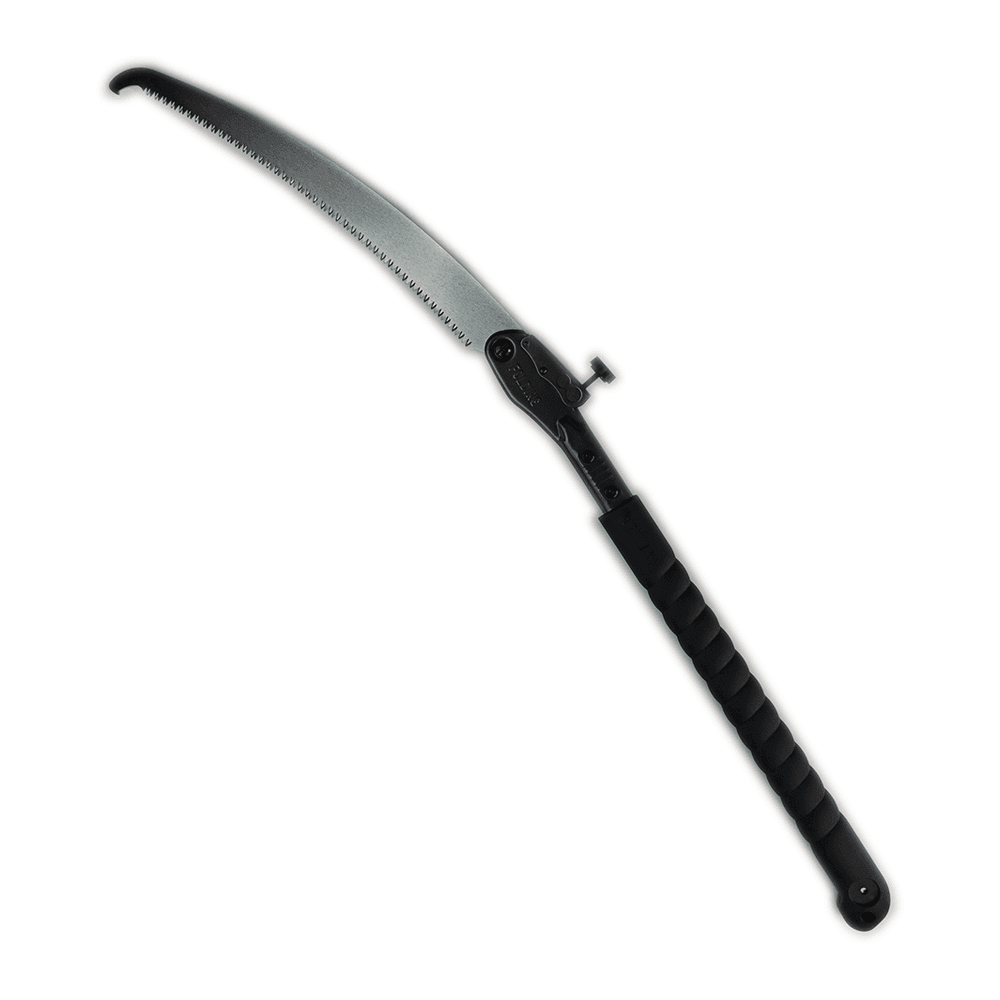
LZWCB-500 Aluminum-Handle Pole Saw
Omów specyfikacje, ilości i wymagania dotyczące opakowań z naszym zespołem.
Dostępne warianty
Suma częściowa:
Szczegóły produktu
LZWCB-500 Aluminum-Handle Pole Saw Overview
The LZWCB-500 Aluminum-Handle Pole Saw is a manual cutting tool designed to solve a simple but common problem: how to trim branches, shrubs, and light wood safely and efficiently without relying on powered equipment. For garden maintenance, campsite work, or routine pruning in tight spaces, a folding hand saw gives the user portability and control. The compact folding design helps reduce storage space and makes it easier to carry in a tool bag, vehicle, or field kit.
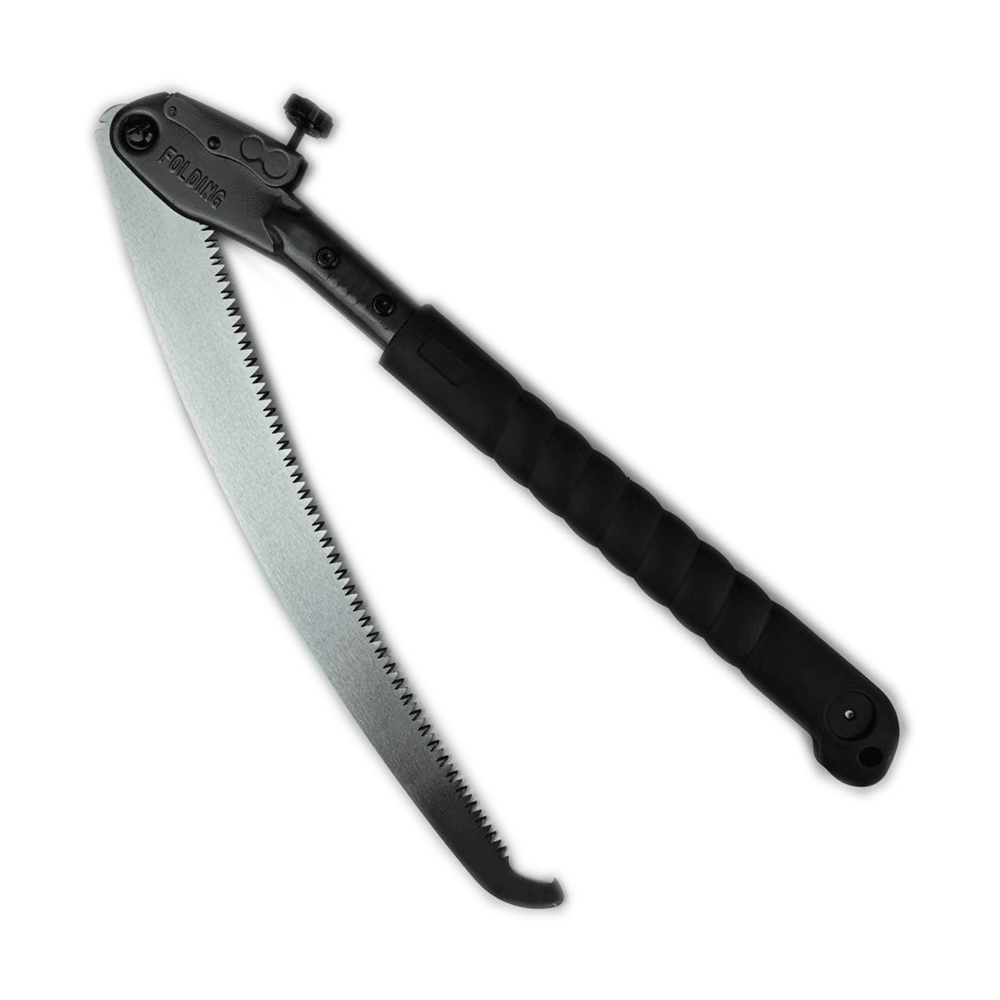
Based on the visible product features, this tool combines a curved serrated blade, a pivoting fold mechanism, and an ergonomic black handle with finger grooves. That combination points to a saw intended for branch engagement and controlled manual cutting, especially where reach, grip comfort, and compact storage matter more than bulk cutting power.
Product Overview
Although the exact blade steel and handle composition are not identifiable from the provided information, the visible construction suggests a practical outdoor hand saw built for pruning and general wood cutting. The blade has a long, narrow profile with coarse teeth along one edge, which is typical of saws used on branches and similar natural materials. The curved geometry can help the blade bite into wood more predictably during pull-style cutting.
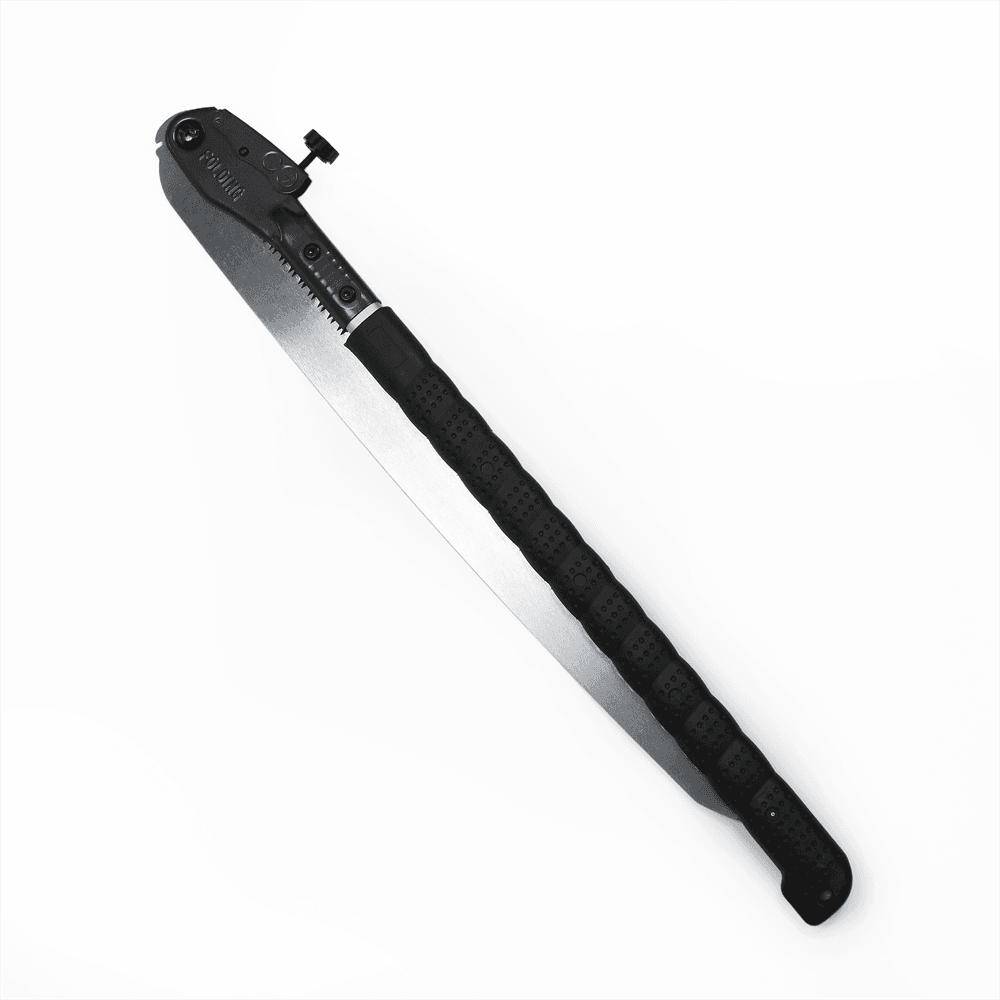
The handle appears to be a molded black grip with textured surfaces and shaped finger recesses. A lanyard hole at the butt end adds a simple attachment option for carrying, hanging, or securing the tool during field use. Near the hinge, a visible locking element marked “FOLDING” indicates that the blade folds into the handle for storage and transport.
Key Specifications and Visible Capabilities
What can be verified visually
The main visible features include a silver-toned metal blade, a coarse tooth pattern, a curved blade shape, a folding pivot joint, and an ergonomically contoured handle. These are practical design cues for a manual pruning saw rather than a straight utility saw or a fine woodworking tool.
The handle geometry also suggests improved control during repetitive cutting. Finger grooves and a textured surface can help the user maintain grip when working outdoors, wearing gloves, or handling damp branches. The lanyard point at the base adds another useful detail for jobsite handling.
Information that is not confirmed
Several details should not be assumed from the image alone: blade length, tooth count, exact locking type, steel grade, handle polymer composition, total weight, and cutting capacity. Claims about rust resistance, cutting speed, or blade replacement are also not supported by the provided data. For procurement use, these would need confirmation from the product specification sheet or sample inspection.
Materials and Finish Options
The blade appears to be metal with a matte or brushed silver finish. In products of this type, the blade is commonly formed and sharpened by metalworking processes, then finished to create a clean cutting edge. However, the exact steel grade is not available here and should be verified before technical evaluation.
The handle appears black and molded, possibly from plastic or a rubberized material over a rigid core. Because only the visible appearance is available, the material should be treated as unconfirmed. Still, the contoured design and darker grip finish are both practical choices for outdoor hand tools, where comfort and control are more important than decorative styling.
Manufacturing Process
Tools in this category are typically produced through a combination of blade forming, tooth grinding or sharpening, and handle assembly. The blade is usually cut or stamped from metal stock, then shaped into the curved geometry visible here. Teeth are then formed and sharpened along one edge to create the saw profile.
The handle likely involves molded components assembled around the pivot and locking area. The folding joint must be aligned carefully so the blade can open and close smoothly while remaining secure in use. From a production standpoint, the visible design points to a straightforward manufacturing route with separate metal and molded parts brought together in final assembly.
Application Scenarios
This type of folding pruning saw is suitable for a range of light to medium manual cutting tasks. In garden settings, it can be used for trimming branches, shaping shrubs, and clearing overgrowth. In landscaping work, the compact profile is useful when moving between sites or working around obstacles where a larger saw would be cumbersome.
For camping and outdoor field use, a folding saw is often chosen because it stores safely when closed and fits easily into a pack. It can help with cutting small firewood, preparing brush, or handling unexpected branch removal. The curved blade makes it especially relevant for overhead or hard-to-reach pruning, where blade engagement matters.
Orchard and general yard maintenance are also plausible use cases. When powered tools are unnecessary or impractical, a well-designed manual saw provides quiet operation, direct control, and low setup time.
Quality Control Considerations
For buyers evaluating a tool like the LZWCB-500 Aluminum-Handle Pole Saw, quality control should focus on a few functional points. First, the folding mechanism should open and close smoothly and hold position securely. Second, the blade should be straight, evenly set, and free from visible defects along the cutting edge. Third, the handle should feel stable in hand, with no looseness around the pivot or grip assembly.
Inspection should also cover basic safety and usability checks. The locking component should be easy to engage and release without excessive play. The teeth should appear consistent along the cutting edge. Any visible burrs, rough spots, or misalignment at the joint would be relevant for acceptance review.
Customization Guidance for B2B Buyers
If this product is being sourced for a private label, tool kit, or outdoor equipment line, the most common customization points would usually include handle color, logo application, packaging design, and possibly blade finish. Since exact material and mechanism details are not confirmed here, customization should be planned after sampling and dimensional confirmation.
Buyers should also define the target user before finalizing specifications. A gardening-focused version may prioritize grip comfort and compact folded size, while a field or camping version may emphasize portability and secure storage. If the tool will be sold in a retail channel, packaging clarity and basic use instructions can matter as much as the hardware itself.
Buyer Decision Factors
When comparing folding pruning saws, buyers usually evaluate four practical areas: cutting geometry, portability, grip comfort, and lock confidence. The curved blade in this model is relevant because it supports branch engagement during pull strokes. The folding format is equally important for transport and safe storage.
Handle shape should not be overlooked. A contoured grip with visible finger grooves can improve control during repetitive work. For end users, that often translates into less hand fatigue and better handling when working above shoulder height or in irregular positions. The lanyard hole is a small but useful feature for carrying or securing the tool in the field.
For procurement teams, the main task is to verify the hidden specification set: blade material, lock durability, overall size, and assembly consistency. Those details determine whether the tool fits entry-level retail use, gardening kits, or more demanding landscaping applications.
Practical Use Notes
Because this is a manual saw, it is best matched to light to moderate branch cutting rather than heavy lumber work. Users typically benefit from letting the teeth do the work instead of forcing the blade. The curved shape and coarse tooth pattern suggest a tool intended for efficient contact with wood fibers rather than delicate finish cutting.
The folding design also implies a simple operational pattern: open fully, confirm the lock is engaged, perform the cut, then fold the blade back into the handle for storage. That sequence reduces exposure during transport and helps keep the saw compact when not in use.
Request a Quote or Product Confirmation
If you are evaluating the LZWCB-500 Aluminum-Handle Pole Saw for distribution, retail, or kit assembly, the next step is to confirm the missing technical details against a sample or specification sheet. That is the best way to verify blade material, dimensions, locking method, and packaging requirements before placing an order.
For sourcing inquiries, request a detailed datasheet, sample photos, and confirmation of customization options so the final product matches your intended market and use case.
| Dostępne warianty | LZWCB-500 Aluminum-Handle Pole Saw |
|---|
Gromadzimy informacje takie jak imię i nazwisko, adres e-mail i historię zakupów, aby świadczyć i ulepszać nasze usługi. Wykorzystujemy te dane do przetwarzania zamówień, komunikacji z Tobą i personalizacji Twoich zakupów.
Wdrażamy rygorystyczne środki bezpieczeństwa, aby zapewnić bezpieczeństwo Twoich danych. Twoje dane udostępniamy wyłącznie zaufanym partnerom, niezbędnym do świadczenia naszych usług, takim jak podmioty przetwarzające płatności i firmy kurierskie.
Korzystając z naszych usług, wyrażasz zgodę na niniejszą politykę prywatności. W razie pytań lub wątpliwości prosimy o kontakt pod adresem hulitools@aliyun.com
Przeglądaj powiązane modele
Zbuduj ofertę odpowiednią dla swojego rynku.
Podziel się modelami, ilościami i wymaganiami dotyczącymi opakowań, które masz na myśli. Nasz zespół pomoże Ci przygotować kolejną rozmowę o zaopatrzeniu.