LZWDB-500 Aluminum-Handle Pole Saw: what buyers should really look at before they spec one
The LZWDB-500 Aluminum-Handle Pole Saw sits in a category that many sourcing teams treat as simple until the first field complaint arrives. A folding pruning saw looks straightforward on paper: a curved metal blade, a grip, a hinge, and a lock. In practice, the difference between a tool that cuts cleanly and one that binds, wobbles, or feels awkward after ten branches is mostly in the details you can actually see and the ones you cannot.
For engineers, product teams, and procurement staff, the real question is not whether this type of saw can cut wood. It can. The decision is whether the geometry, grip, folding mechanism, and blade style fit the intended work: landscaping, garden maintenance, campsite use, or general outdoor trimming. That matters because a saw that is comfortable and predictable in the hand gets used correctly. A saw that feels flimsy often gets abandoned, and that is usually where quality problems begin to show up in the field.
What the visible design tells you
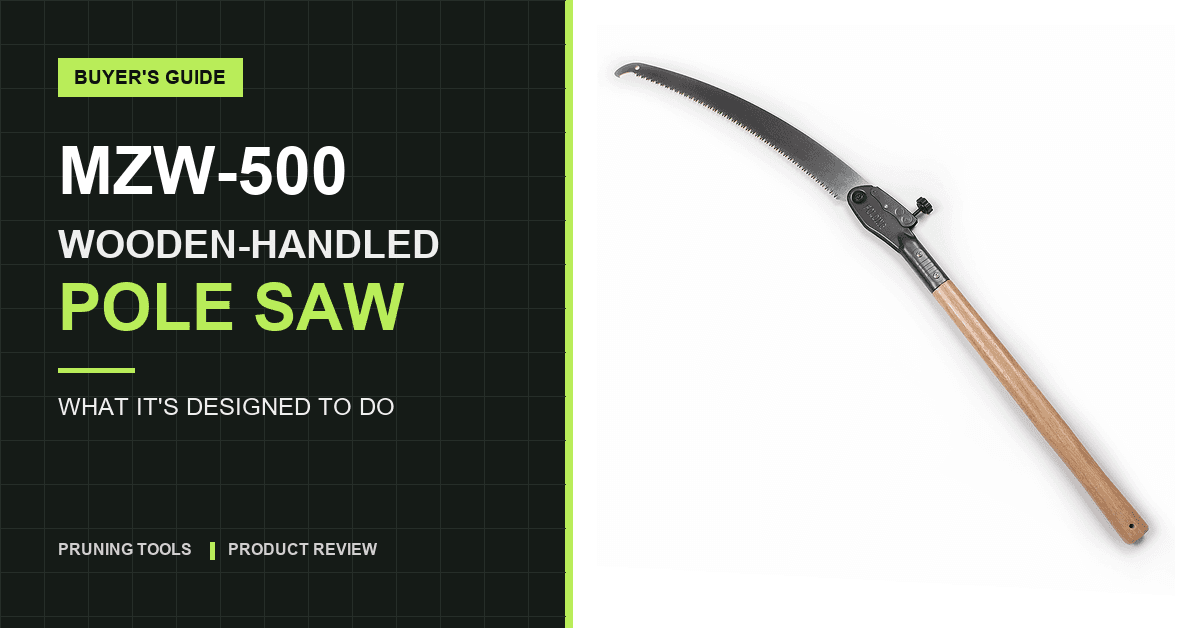
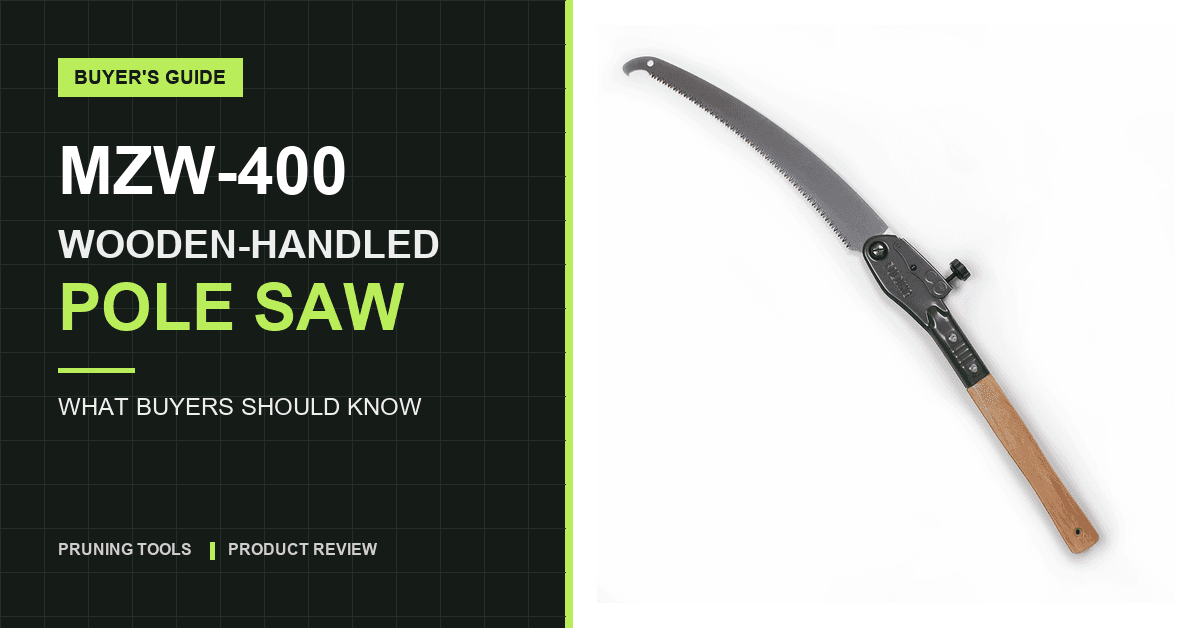
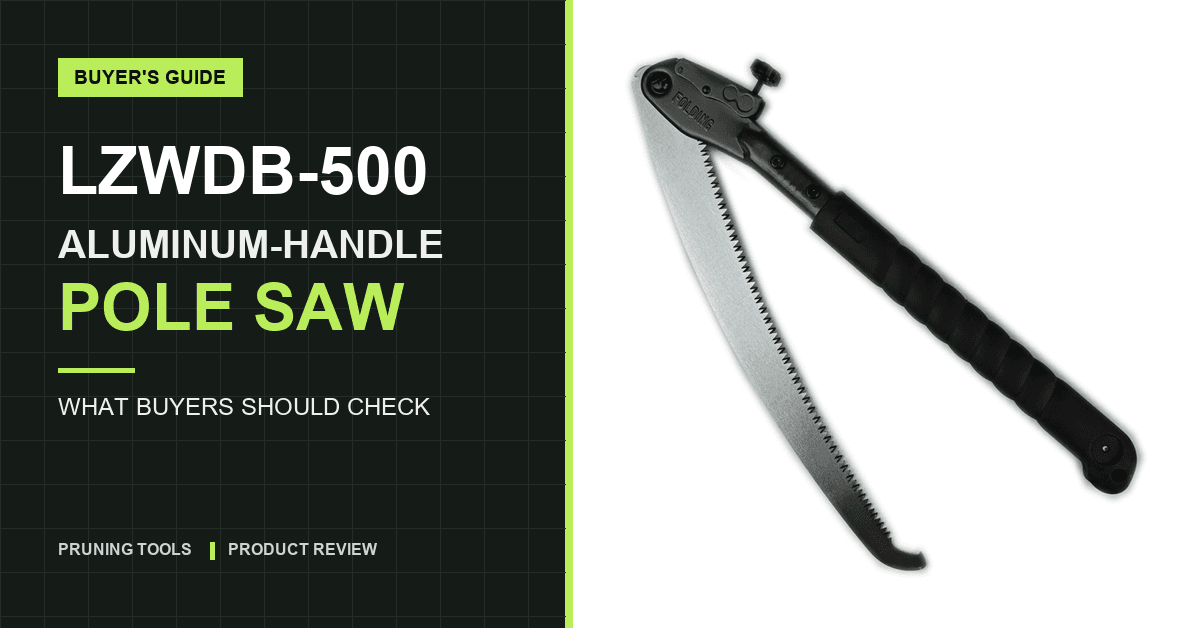
From the visible product details, the LZWDB-500 Aluminum-Handle Pole Saw appears to be a folding hand saw or folding pruning saw rather than a powered cutting tool. The blade is long and curved, with a row of coarse triangular teeth on one edge. That profile is typical of pull/push sawing actions used in outdoor maintenance, especially where controlled manual cutting is preferred over bulk removal.
The handle is dark, contoured, and shaped with finger-groove style ribs. That is not cosmetic fluff. A grip like that helps keep the hand from sliding when the user is working at odd angles or with wet gloves. The pivot area includes a visible locking or adjustment knob, and the blade folds against the handle for storage. There is also a lanyard hole or end opening, which is a small but useful detail for field carry, hanging storage, or tethering.
One practical note: because the blade is visible in the open position and there is no obvious full guard, users still need to treat it like a real cutting tool. Folding does not mean harmless. It only means easier to carry.
Why the folding format matters in the field
For a buyer, the folding mechanism is not just a convenience feature. It affects transportation, storage, and safety. On a landscaping truck, in a maintenance cart, or in a camping kit, a folding pruning saw is easier to stow than a fixed-blade hand saw. It also reduces the chance of accidental contact during carry, provided the lock is reliable and the user actually closes it properly.
That said, folding joints introduce their own risks. Any hinge, cam, or lock point is a potential wear area. If the mechanism has play, the blade can feel unstable under load. If it is too stiff or awkward, workers may avoid folding it fully, which defeats the purpose. Buyers comparing this category should ask for enough detail on the locking system to judge whether it is appropriate for repeated field use. The product image shows a pivoting head and a lock area, but not the internal design, so it is better to verify that part rather than assume durability from appearance alone.
Blade shape and tooth pattern: why they matter more than people think
The visible blade on the LZWDB-500 Aluminum-Handle Pole Saw has a curved profile and coarse serrations. That combination generally supports more aggressive cutting and can help with efficient bite into branches. Curved blades often work well in pruning because they can keep more teeth engaged through the cut, especially during the draw stroke. In plain terms, the blade does some of the work for the user.
Still, buyers should not overread what the image can prove. We do not know the steel grade, hardening method, exact tooth count, or whether the blade is intended mainly for green wood or dry wood. Those details affect cut speed, edge retention, and fatigue. A blade that looks sharp in a catalog photo may perform very differently once sap, bark, and repeated use enter the picture.
If your team is sourcing for gardening or orchard work, tooth geometry and blade stiffness deserve attention. For camping or bushcraft, portability and ease of cleaning may matter more. The same general folding pruning saw category can serve both, but not equally well.
Handle construction and operator comfort
The handle appears to be a molded black polymer or rubberized composite over a rigid structure, with a textured surface and finger grooves. That is a sensible approach for a manual saw because hand fatigue is often the limiting factor before blade wear is. A comfortable grip improves control, especially when a user is cutting above shoulder height or working in tight branches where the saw angle changes repeatedly.
For purchasing teams, comfort is one of those specifications that rarely shows up in a formal datasheet but often drives acceptance. A saw can have decent blade performance and still be rejected by crews if the handle is slippery, too narrow, or poorly balanced. The visible end hole also suggests at least some thought toward field handling and storage, which is useful in tool kits and outdoor maintenance environments.
Likely manufacturing approach, with a few caveats
Based on the visible structure, this product likely combines metal blade fabrication with a molded handle assembly and a separate folding hinge or lock component. The blade may be stamped, ground, or otherwise toothed along one edge, then finished with a brushed or matte silver surface. The handle is likely injection-molded plastic or an overmolded grip around a structural core. That is a common and practical route for this kind of tool.
But it is worth stating plainly: the exact process is not verifiable from the image alone. The same is true for the blade finish, any coating, and the internal hardware. Buyers should not build a sourcing decision around assumptions that the photo cannot support. A decent-looking folding saw can still vary a lot in material quality, hinge fit, and manufacturing consistency.
How this type of saw is usually used
The use cases are familiar: pruning small trees and shrubs, trimming branches in landscaping work, cutting saplings, and handling light outdoor maintenance. In camping or bushcraft settings, a folding hand saw is often preferred for portability and for producing cleaner cuts than a knife would. It is also common in utility work where a compact manual cutter is useful to keep in a bag or vehicle.
For field teams, the main benefit is control. Manual cutting lets the operator work slowly around nearby structures, live plants, or cable runs where a powered tool would be excessive. That said, the tradeoff is obvious: a folding saw is only as effective as the user’s technique and the branch condition. Tough, dry wood and awkward cut angles can slow even a well-made blade.
Buyer selection criteria that are easy to miss
If you are evaluating the LZWDB-500 Aluminum-Handle Pole Saw or a similar folding pruning saw, start with the basics: does the blade lock solidly open, does the handle give reliable grip, and does the folded form actually save space in your workflow? Those three questions often eliminate half the options on the market.
Then check for less obvious issues. Is the hinge tight enough to minimize wobble, but not so stiff that users fight it? Does the blade tooth pattern suit the wood you expect to cut? Is the handle shape comfortable for gloved use? Is there a clear way to store or carry the tool safely? These are not glamorous details, but they determine whether the tool earns a place in regular use.
One practical warning: do not assume that all folding saws are interchangeable just because they look similar. The difference between a tool meant for light garden pruning and one intended for harsher outdoor use can show up quickly in the joint, the edge geometry, and the handle feel.
Common mistakes when sourcing folding pruning saws
The most common mistake is buying off the photo. A curved blade and textured grip are good signs, but they are not enough. Another mistake is focusing on the blade alone and ignoring the pivot hardware. If the lock fails or loosens, the rest of the tool stops mattering.
Teams also sometimes over-specify features they will never use. A rugged-looking saw can be overkill for routine garden work, while a lightweight folding model may be enough for crew vehicles and weekend kits. Match the tool to the job, not the other way around. That sounds obvious, yet it is where a lot of shelf stock ends up gathering dust.
FAQ
Is the LZWDB-500 Aluminum-Handle Pole Saw a powered tool?
No. Based on the visible product description and form, it is a manual folding saw used for cutting by hand.
Can it be used for pruning and landscaping?
Yes, that is the most likely application. It appears suited to branches, shrubs, and other light outdoor cutting tasks.
Does the image confirm the blade material?
No. The blade appears metallic, likely steel, but exact grade and treatment are not verifiable from the image.
Is this better for green wood or dry wood?
That cannot be confirmed from the available data. Buyers should verify intended cutting media before placing volume orders.
What a practical next step looks like
If you are sourcing the LZWDB-500 Aluminum-Handle Pole Saw for a catalog, a maintenance kit, or a private-label outdoor line, the best next step is to request the missing specification points rather than infer them. Ask for blade length, tooth count, lock design, handle material, and intended cutting application. Those few details will tell you far more than the product photo ever will.
For engineers and product managers, that is usually the difference between a decent-looking folding pruning saw and a tool that performs consistently in actual use. In this category, the visible design gets attention, but the hidden details decide whether buyers come back for more.