Why a folding pruning saw still earns its place in the truck, shed, and tool kit
The MZW-400 Wooden-Handled Pole Saw sits in a familiar but often underestimated corner of the hand-tool market: a compact folding saw built for cutting branches, brush, and other woody material without bringing out a powered tool. For engineers, sourcing managers, and product teams, the appeal is not just that it cuts wood. It is the combination of portability, manual control, and simple construction. That matters when the job is light to medium pruning, when access is awkward, or when a quieter, safer carry option is preferable to a powered saw.
At first glance, this type of tool looks straightforward. A curved serrated blade, a wood handle, a folding joint, and a locking point at the hinge. But those details tell you quite a bit about how the tool is meant to be used and what buyers should pay attention to. If you are evaluating the MZW-400 Wooden-Handled Pole Saw, the real question is not whether it is a saw. The question is whether its geometry, materials, and folding layout fit the work environment you have in mind.
What the MZW-400 is built to do
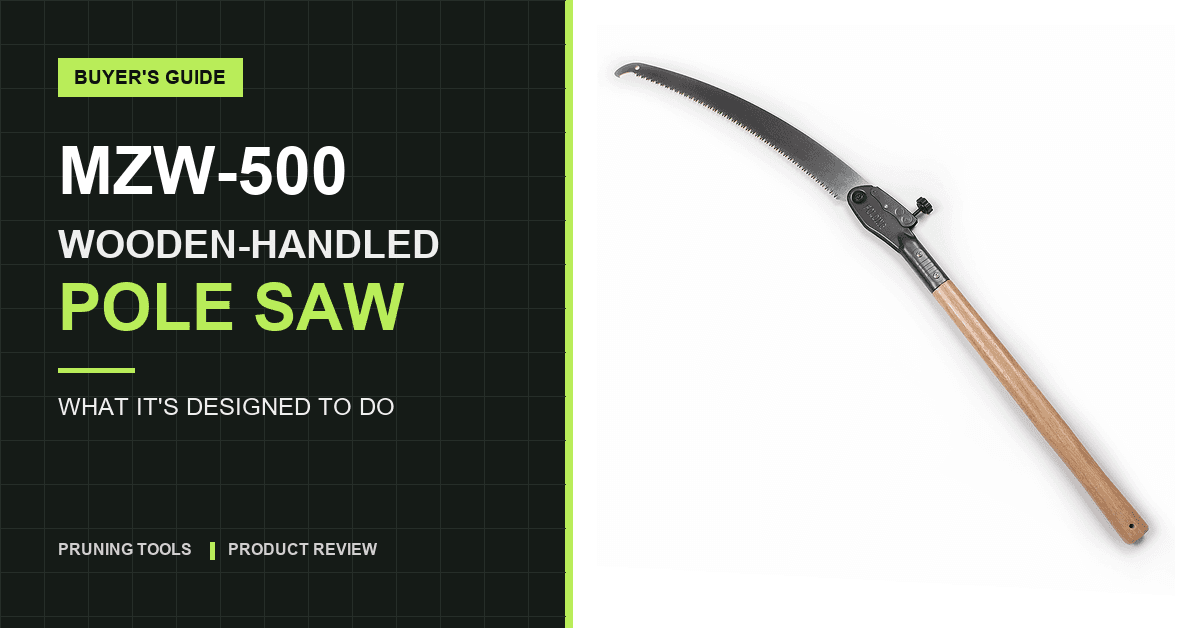
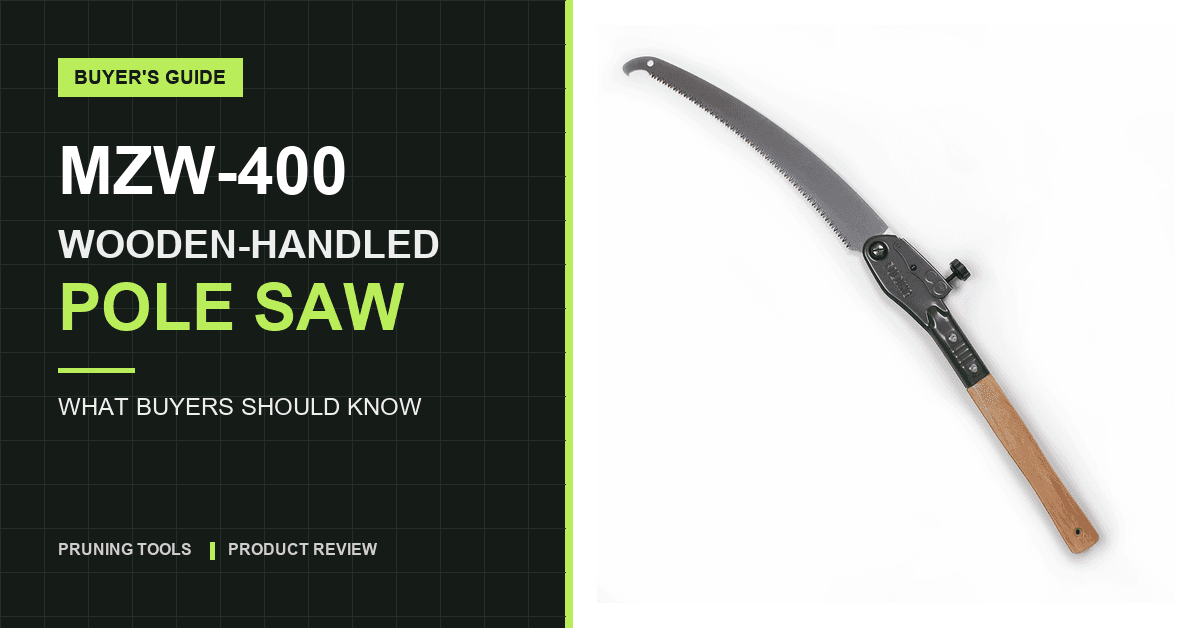
The visible design points to a pruning and outdoor cutting tool rather than a general carpentry saw. The long, narrow blade has a curved profile and aggressive serrations along one edge, which is a common arrangement for pull-cutting through branches and small limbs. The pointed hook-like tip can help start a cut or catch on material during certain pruning motions. That is useful in orchards, landscaping maintenance, and tree care where clean access to a branch matters more than rapid stock removal.
The folding mechanism changes the equation. Instead of carrying an exposed blade, the user can close the saw into a more compact and safer form. That improves storage, transport, and day-to-day handling. For field crews and gardeners, it also lowers the odds of accidental contact with clothing, gloves, or other tools in a kit bag.
The wooden handle is another practical clue. It suggests a traditional hand-tool feel, with a grip length suited to single-hand control. Wood does not solve every ergonomics issue, of course, but it can be comfortable in cold weather and provides a classic balance for manual cutting. The end hole in the handle also suggests hanging storage, which is the sort of detail users appreciate after the first week in the shed.
Key visible construction features buyers should notice
Not every saw in this category is assembled the same way, and the visible construction gives a few useful hints.
The blade appears to be dark-coated or polished steel, though the exact steel grade is not identifiable from the image. The dark finish may help with glare or surface protection, but buyers should avoid assuming performance from finish alone. A black or gray coating can be useful, yet the real cutting behavior still depends on tooth geometry, steel quality, and heat treatment.
The hinge area looks like a machined metal joint with a locking knob or button nearby. That matters because folding tools rely heavily on lock quality. In practice, a folding saw should open securely and stay open during use without unwanted play. A lock that feels loose on the bench often feels worse in the field, especially when cutting overhead or at arm’s length. This is one of those small details that can turn an otherwise decent tool into a nuisance.
The blade itself is curved rather than straight. That is not cosmetic. A curved pruning blade tends to support smoother engagement across the cut, especially in draw strokes. It can help maintain contact with wood and reduce the tendency to skip. For users accustomed to straight utility saws, that slight curvature can make a noticeable difference in branch work.
Where this kind of saw fits in real-world use
For buyers, the MZW-400 Wooden-Handled Pole Saw appears suited to several overlapping use cases.
In landscaping and garden maintenance, it is a handy tool for trimming small limbs, clearing overgrowth, and managing shrubs that are too thick for shears. In orchard work, a folding pruning saw can be used for selective branch removal and general maintenance between heavier operations. For camping and field kits, portability is often the deciding factor. A folding saw is easier to pack than a fixed-blade pruning tool, and it is less awkward to store alongside ropes, gloves, and other gear.
There is also a practical middle ground: property maintenance. A homeowner or maintenance crew may not need a powered pole saw every day. For occasional branch clearing, storm cleanup, or access-limited pruning, a manual folding saw can be the more economical and lower-fuss choice.
What matters most when comparing folding pruning saws
If you are sourcing this kind of tool, the obvious mistake is to compare only blade length or overall appearance. Those are visible, but not decisive.
The first selection factor is lock integrity. A folding blade that opens and closes easily is not automatically a good tool. It needs to lock with confidence and release without awkward force. The second factor is blade behavior in wood. Because this model uses a curved serrated blade, it is likely optimized for draw cutting, so buyers should evaluate how that style matches intended use.
Handle comfort comes next. A wood handle can feel excellent in hand, but the finish, contour, and balance matter. A handle that is too slim may feel insecure with gloves. One that is too bulky may reduce control during repeated cuts. For field tools, a small compromise in comfort becomes a bigger issue over a long day than it seems on the showroom floor.
Then there is portability. The folding format is one of the MZW-400’s most useful traits. It offers a safer carry profile and easier storage, especially when the tool is shared across crews or tossed into a vehicle compartment. In many buying situations, that alone justifies choosing a folding version over a fixed pruning saw.
Common buyer mistakes with folding wood saws
One frequent mistake is assuming all pruning saws are equally suitable for both green wood and dry wood. In reality, tooth geometry and blade flexibility can change how the saw behaves in different materials. Another is overlooking maintenance. A folding saw still needs basic care: clearing resin or debris, keeping the pivot area clean, and checking the lock for wear.
It is also easy to underestimate the importance of the handle finish. A natural wood grip can be durable, but it should be inspected for cracks, rough edges, or loose fasteners if the tool will see regular outdoor use. That is particularly relevant in damp storage conditions, where untreated or poorly finished wood can age faster than buyers expect.
A final caution: do not infer professional-grade performance from the presence of a metal lock, a dark blade, or a traditional handle. Those details are encouraging, but they are not substitutes for a proper test in the intended material. A saw that feels good in hand may still cut slowly if the tooth pattern is wrong for the job.
Practical evaluation checklist for sourcing teams
When reviewing the MZW-400 Wooden-Handled Pole Saw for procurement or product-line fit, the most useful questions are the boring ones.
Does the folding action feel controlled and repeatable?
Does the lock hold the blade firmly under side pressure?
Is the handle comfortable for gloved and bare-handed use?
Does the blade geometry match pruning, camping, or general utility work?
Are the materials and finish consistent enough to support the expected service life?
These are the questions that separate a pleasant sample from a reliable inventory item. They also help keep a sourcing discussion grounded in function rather than styling.
FAQ: short answers buyers usually want
Is the MZW-400 meant for tree pruning only?
Not necessarily. Its visible design points to pruning and branch cutting, but it could also suit landscaping, yard cleanup, and some camping tasks.
Is the blade material known?
No exact blade material grade is visible from the provided information. It appears to be steel with a dark or polished finish, but that should not be treated as a confirmed specification.
Why choose a folding saw over a fixed saw?
Mainly for portability and safety. Folding tools are easier to store and carry, especially in kits or vehicles, and the blade is protected when closed.
What should a buyer verify before ordering in volume?
Lock stability, handle quality, blade consistency, and how well the saw actually cuts the intended wood type. Those points matter more than appearance.
What the MZW-400 represents in the market
The MZW-400 Wooden-Handled Pole Saw belongs to a very practical segment of hand tools: simple, field-ready, and purpose-built for woody material where powered equipment may be unnecessary or inconvenient. Its folding structure, curved serrated blade, and wood handle suggest a tool designed around portability and manual control rather than flash.
That is often exactly what buyers want. Not every pruning job needs a motor. Sometimes the better product is the one that is easy to carry, quick to open, and honest about what it can do.
If you are evaluating a folding pruning saw for landscaping, orchard work, or outdoor kits, the MZW-400 is worth reviewing against your actual use case rather than a generic tool spec sheet. Ask for the details that remain unconfirmed, test the lock, inspect the handle, and compare the cutting geometry against your material. That is the fastest way to know whether it belongs in your program or your catalog.