Why a wooden-handled pole saw still earns a place in the yard shed
The MZW-500 Wooden-Handled Pole Saw sits in a familiar but still useful category: a manual pruning saw built for branches, limbs, and other woody material where a chainsaw is excessive or awkward. For many buyers, that is the real decision point. You are not comparing it with another flashy garden gadget; you are deciding whether a simple hand tool can deliver enough reach, control, and cutting speed for routine trimming without adding fuel, batteries, noise, or extra maintenance.
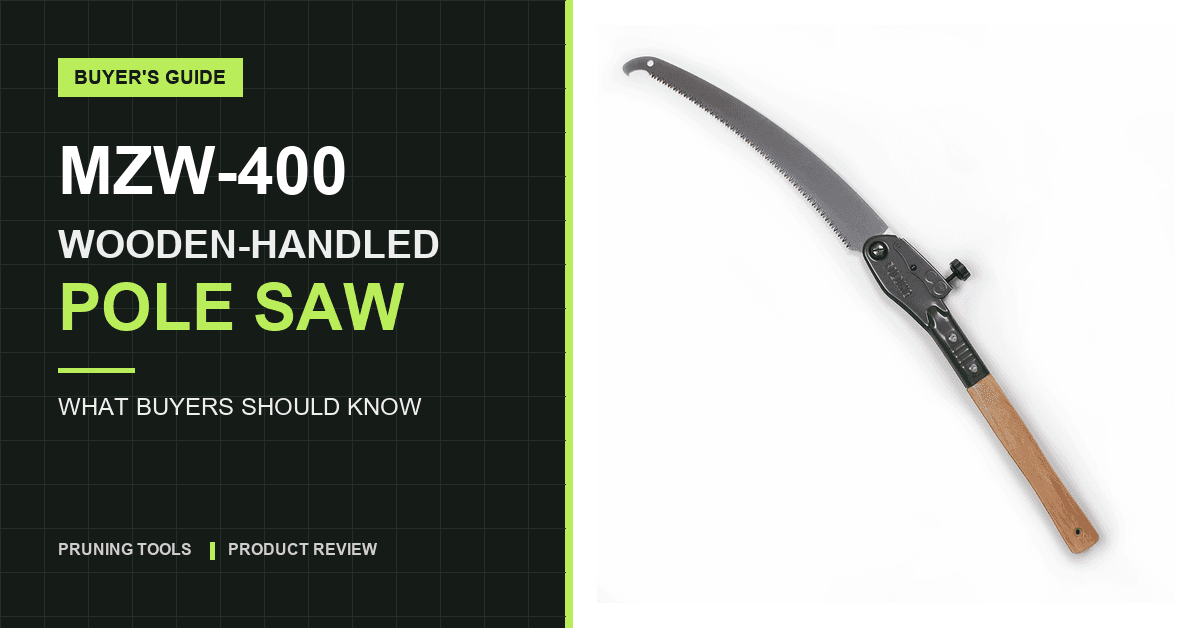
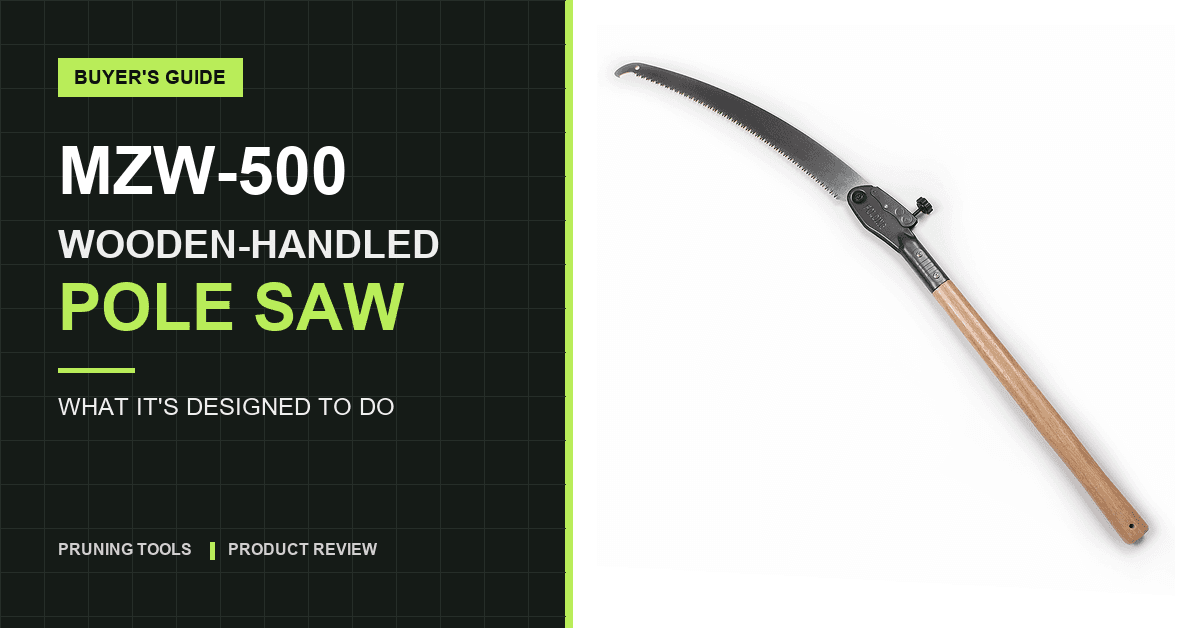
The design cues are straightforward. A long, narrow curved blade, coarse teeth, a black mounting head with what appears to be an adjustment knob, and a straight cylindrical wooden handle with a hanging hole. Nothing about that layout is mysterious, but the combination matters. Curvature helps the saw bite on the pull stroke. Coarser teeth can clear wood fibers faster. The wooden handle gives a familiar grip and a more traditional feel, which some crews still prefer because it is easy to hold with gloves and simple to store.
For sourcing managers and product teams, this kind of tool is usually judged less by novelty and more by how well it balances cutting performance, durability, and user fatigue. That means looking at blade geometry, head construction, handle finishing, and whether the attachment hardware looks robust enough for repeated field use.
What the MZW-500 is designed to do
Based on the visible construction, the MZW-500 Wooden-Handled Pole Saw is aimed at pruning branches, trimming small limbs, cutting saplings, and handling light outdoor cutting work. It is also the sort of tool that appears in landscaping, orchard maintenance, groundskeeping, and campsite or property cleanup tasks. In practical terms, it fills the space between a small hand pruner and powered cutting tools.
The curved blade suggests a pull-cut style. That is important because pull cutting generally gives better control on overhead or awkward cuts. The saw is less likely to wander when the teeth engage, and the operator can use body position rather than force alone to keep the cut aligned. For green wood and general branch trimming, that is usually more efficient than a straight-blade hand saw of similar size. It is not magic, though. If the user expects it to chew through oversized hardwood limbs quickly, frustration will follow.
Quick takeaways for buyers
If you are evaluating the MZW-500 for resale, field use, or private-label sourcing, these are the points that matter first:
The curved blade is useful for branch work, especially where a controlled pull stroke helps.
The coarse toothed edge points toward faster wood removal rather than fine finish cuts.
The wooden handle is simple, familiar, and easy to hang or store.
The black head and visible fastener suggest a mechanical joint that may help with positioning or assembly, though the exact mechanism is not confirmed.
The design is manual, so cost, maintenance, and safety considerations are different from powered tools.
That last point is easy to overlook. A manual saw can be a selling advantage because it lowers operational complexity, but only if the blade and handle are built well enough to stand up to repeated use. Cheap assembly shows up quickly in a garden tool. Wobble at the head, poor tooth consistency, or a slippery handle finish can turn a simple tool into a complaint generator.
Blade shape, tooth pattern, and why they matter
The blade is the working heart of the MZW-500 Wooden-Handled Pole Saw. From the product information, it appears to be a long, curved metal blade with exposed coarse teeth along one edge and a smooth reflective or dark-coated finish depending on the view. That combination is common in pruning saws because it helps the user cut on the pull stroke and clear chips without the blade binding too tightly in the kerf.
Coarse teeth are generally better for faster cuts in green wood or moderately sized branches. They remove material quickly, though usually at the cost of a rougher cut surface. For garden trimming, that trade-off is often acceptable. If the saw is intended for clean woodworking cuts, a coarser tooth set would be less suitable. But this is a pruning tool first, and the geometry reflects that.
The curved profile also helps when reaching above shoulder height or working around branch forks. A straight saw can work, but a curved blade often tracks more naturally through a branch when the user is standing at an angle. In field use, that small difference can reduce fatigue and improve the sense of control.
Wooden handle construction: simple, but not trivial
The straight cylindrical wooden handle may look basic, but handle design still affects whether the saw feels dependable or clumsy. A natural wood handle can offer a warm grip and an old-school sense of balance. It is also easy to hang via the drilled hole at the end, which is a useful detail for workshop storage, retail display, or hanging in a maintenance shed.
What matters more than the visual simplicity is the finishing quality. A lightly finished or unfinished handle can feel more authentic, but it should not be rough, splinter-prone, or excessively dry. For field users, that becomes an issue when gloves get wet or when the saw is used for longer sessions. A handle that is too smooth can also become slippery. In other words, the best finish is not always the prettiest one. It should simply be predictable in the hand.
Because the handle species is not confirmed, it would be unwise to make claims about strength or moisture resistance beyond general expectations for a wooden tool handle. Buyers should inspect consistency in grain, end sealing, and fit at the mounting point rather than assuming all wooden handles behave the same.
Head assembly and mounting hardware
The black head or blade mount is another part worth a careful look. It appears to include fasteners and a small tightening knob, which suggests some kind of adjustable or securing function. The exact locking range is not stated, and it is better not to guess at whether the head folds, pivots, or simply tightens into one fixed position. Still, the visible hardware is a reminder that the joint is where many failures begin in a hand saw of this style.
For manufacturers and importers, the head assembly needs to resist loosening under repetitive cutting loads. Users often apply more force than expected when a branch begins to bind. If the joint flexes, the saw feels imprecise; if it loosens, the tool loses trust immediately. That is especially true for pole-saw-style tools, where leverage magnifies any weakness at the connection point.
When comparing units in this category, look for clean fit between handle and head, a secure fastener layout, and a blade mount that does not appear thin or easily twisted. Small manufacturing shortcuts become obvious very quickly in a pruning environment.
How this type of saw compares with common alternatives
For everyday buyers, the main comparison is usually against three alternatives: a compact hand pruner, a powered pruning tool, or a different long-reach cutting implement. The MZW-500 sits in the middle. It offers more reach and cutting capacity than a hand pruner, but without the weight, charging burden, or noise of powered equipment.
Against battery tools, the manual saw wins on simplicity. There is no battery degradation, no charging cycle, and no motor maintenance. Against smaller pruning tools, it wins on reach and branch diameter. Against a heavier outdoor saw, it usually wins on maneuverability and cost sensitivity. The downside is obvious: it depends entirely on user effort, so cutting speed will vary with operator strength and branch condition.
That trade-off is not a flaw. It is the point. Buyers should decide whether the job needs repeatable muscle-powered pruning or something faster and more specialized.
Selection criteria that are easy to overlook
A saw like the MZW-500 should not be selected on blade length alone, especially since the exact blade size is not provided. Better buying criteria include the following:
Blade stiffness: a pruning blade should flex enough to avoid feeling brittle, but not so much that it wobbles under load.
Tooth quality: coarse teeth are useful only if they are consistently formed and sharp.
Handle comfort: the wood should be smooth, secure, and comfortable with work gloves.
Joint security: the head and fastener area should not give the impression of looseness.
Storage practicality: the hanging hole is a small but real advantage in shops and garden centers.
There is also the question of intended user. A homeowner wants ease and safety. A landscaping crew wants durability and low fatigue. A retail buyer wants a tool that displays well and does not come back with complaints. One product can serve more than one audience, but not equally well.
Common mistakes when choosing a pruning saw in this style
The first mistake is assuming all curved pruning saws are interchangeable. They are not. Tooth pattern, blade profile, and head construction can make two similar-looking tools behave very differently in use.
The second mistake is overvaluing appearance. A clean reflective blade and natural wood handle can look appealing, but appearance does not tell you enough about edge retention or joint strength. The third mistake is ignoring storage and handling. A tool with a good blade but poor hanging or mounting options can become inconvenient in a busy shop, which matters more than some buyers expect.
Another practical warning: if the tool is used on wet, resinous, or contaminated wood, maintenance becomes part of the buying decision. Build quality alone is not enough. Users still need a way to keep the blade clean and the handle dry enough to prevent long-term wear.
Frequently asked questions
Is the MZW-500 better for green wood or dry wood?
The coarse toothed pruning style suggests it is well suited to branch work and general wood cutting, especially where fast bite is more useful than a polished cut. That usually means green or fresh wood is a natural fit, though the tool can also handle dry wood within reasonable branch sizes.
Can it be used for landscaping and orchard maintenance?
Yes, that is one of the most plausible use cases. The long-reach manual design fits routine pruning, limb trimming, and light grounds maintenance.
Does the wooden handle make it old-fashioned?
Not necessarily. In hand tools, wood still has a place because it is easy to hold, easy to store, and familiar to users. The important question is whether the finish and fit are consistent.
Is the head adjustable or foldable?
The visible knob and hardware suggest some kind of adjustment or secure mounting function, but the exact mechanism is not confirmed. Buyers should verify that directly rather than assume.
What a sensible buyer should ask before placing an order
If you are sourcing the MZW-500 Wooden-Handled Pole Saw, ask for clarity on the details that are not visible in the photos: blade material, tooth specification, handle wood type, joint design, and whether the tool is fixed or adjustable. Those points affect warranty risk, field performance, and customer satisfaction far more than a polished product description does.
A reasonable sample check should also cover blade alignment, finish quality, and fastener security. Nothing exotic. Just the unglamorous basics that determine whether a pruning saw feels dependable after the first dozen cuts.
If you are evaluating it for a catalog, retail program, or maintenance lineup, the next step is straightforward: confirm the hidden specifications, compare the joint and blade finish against your current range, and test whether the saw actually holds up in the kind of wood your users cut most often. That is where the real answer lives, not in the photo.