What the C-3006 Back Saw is used for, and why buyers still care
The C-3006 Back Saw sits in that practical middle ground between a rough site tool and a more precise bench saw. For engineers, sourcing managers, and product teams, the real question is not whether a hand saw is old-fashioned; it is whether a manual cutting tool still makes sense for controlled wood cutting, trim work, or general shop tasks where power is unnecessary or inconvenient. In many workshops, that answer is still yes.
A tool like the C-3006 Back Saw is built around straightforward mechanics: a straight steel blade, visible teeth along one edge, and a molded handle that gives the user a secure one-handed grip. That simplicity matters. There is no motor to service, no power source to manage, and little to distract from the cut itself. For some jobs, especially short cuts, fine trimming, or work in tight spaces, manual control is still the safest and most economical option.
Quick read on the product style
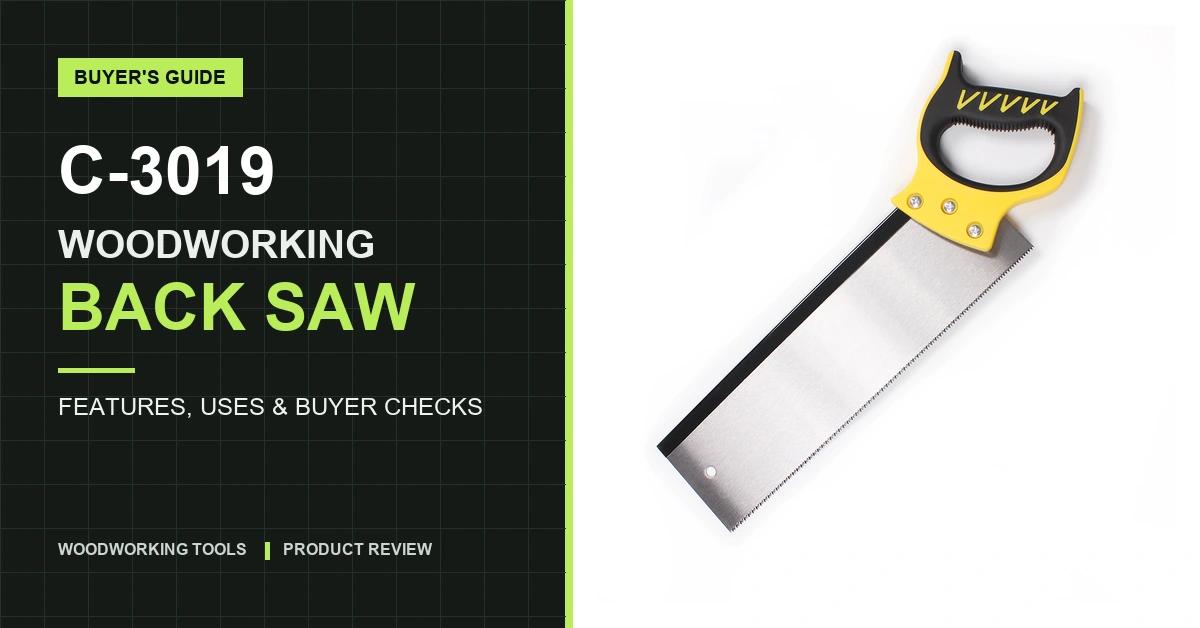
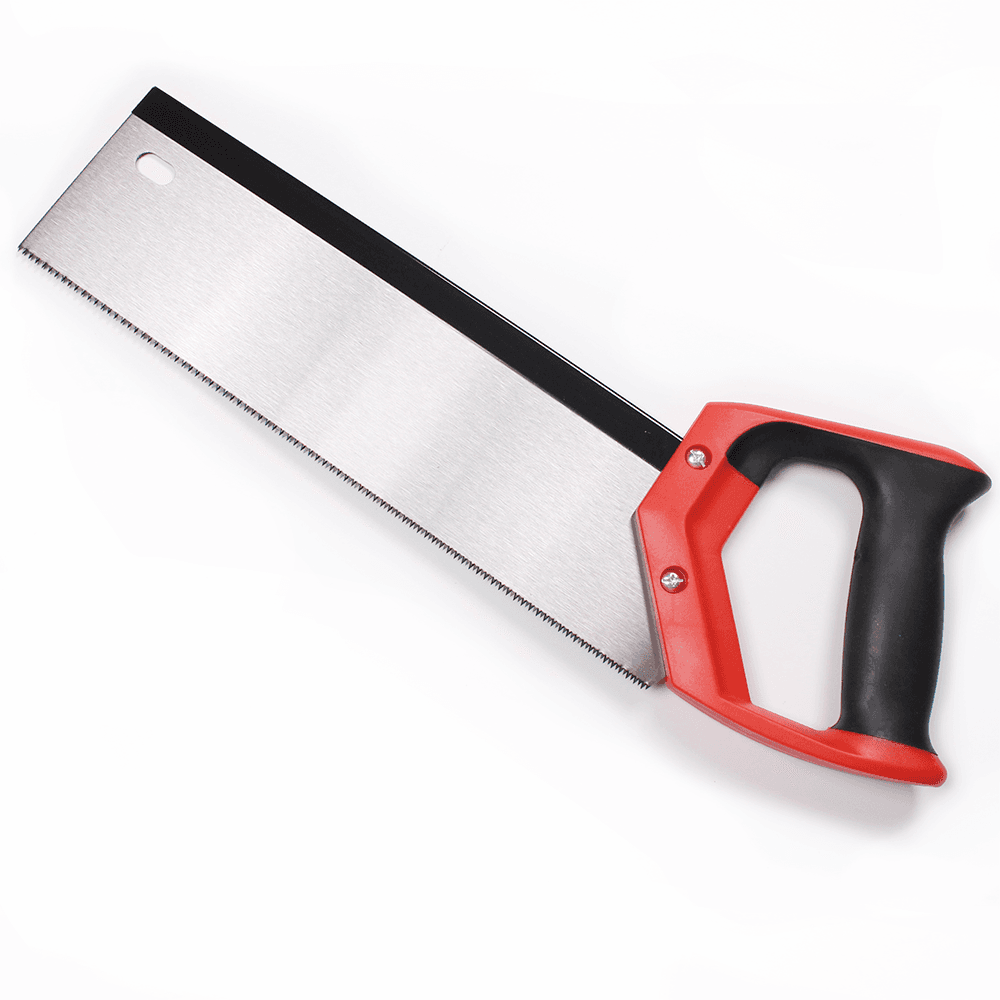
At a glance, the C-3006 Back Saw appears to be a stamped-steel hand saw with a brushed silver blade, a black upper band, and a red-and-black ergonomic handle assembly. The blade has fine visible teeth, a hole near the tip for hanging or storage, and a spine-less straight profile rather than a reinforced back. That makes it look more like a general-purpose panel saw or crosscut-style manual saw than a specialty blade, although the exact tooth geometry is not confirmed.
The handle design is worth noting. It is not a simple flat wooden grip, but a molded closed-grip style with fasteners visible at the attachment point. That usually signals a more production-oriented hand tool: easier to mold, easier to assemble, and often better suited to repeated use in a workshop or jobsite environment.
Why this type of saw remains relevant in manufacturing and maintenance
Manual saws are not glamorous, but they solve a real set of problems. A hand saw is useful when a cut needs to be made without power, when the material is awkwardly positioned, or when the operator wants a slower, more deliberate feed rate. That can matter in maintenance work, furniture repair, site fitting, packaging, or light construction.
For buyers, the value is often not just in cutting wood. It is in control, portability, and simplicity. A saw with a fine serrated edge can handle lumber, plywood, timber, trim, branches, and similar board materials where a careful manual pass is preferable to setting up a powered tool. In some operations, the tool may also be kept as a backup for quick tasks that would otherwise interrupt a production line or installation crew.
That said, manual tools have limits. They demand operator skill, and cut quality will vary more than with powered equipment. If the job requires repeatable dimensional accuracy or high throughput, a hand saw is usually the wrong answer. It is a practical tool, not a production substitute.
What the visible construction tells you
There are a few visible details that matter when evaluating a saw like this for procurement or cataloging.
The blade appears to be metal with a satin or brushed finish. That suggests a stamped and sharpened steel blade, though the exact grade, hardness, and heat treatment are not provided. The teeth are fine and closely spaced, which generally points toward cleaner cutting behavior and less aggressive material removal than a coarse-tooth saw. The single hanging hole near the tip is a small but useful feature for storage, pegboard display, or shop organization.
The handle is molded in contrasting red and black plastic, with a rubberized or textured grip insert visible in the black section. That kind of form factor is common in utility hand tools because it gives the user a more secure hold than a plain hard-plastic handle. The closed grip shape also helps with one-handed use and reduces the chance of slipping during quick cuts.
One small caution: a visible handle design does not tell you everything about ergonomics. Balance, grip angle, and vibration feel can still vary a lot between products that look similar in photos. If the saw will be used daily, a physical sample is worth more than any catalog description.
How buyers should evaluate a manual saw like this
When comparing a tool in this category, the first decision is not branding. It is fit for task.
Ask what is being cut most often: softwood trim, plywood sheets, timber, branches, or mixed jobsite material. Fine teeth usually support cleaner cuts, while coarser teeth tend to remove material faster. Because the exact tooth count or TPI is not supplied here, buyers should not assume this tool is optimized for one specific material without testing.
Next, look at handle comfort and control. A molded plastic handle can be perfectly serviceable, but the grip shape matters if the tool will be used for extended periods. The visible fasteners suggest the blade and handle assembly is mechanically secured, which is generally preferable to a loose-feeling press-fit construction. Still, buyers should check for flex at the joint and for any sharp transitions where the hand contacts the frame.
Finally, consider storage and shop workflow. The hole at the blade tip is a small operational benefit. Tools that can be hung on a pegboard or safety hook are easier to keep track of, and that often matters more in a shared workshop than people expect.
Common mistakes when selecting this kind of tool
One common mistake is assuming all hand saws are interchangeable. They are not. A saw with fine serrations may cut more cleanly, but it may not be the best choice for fast rough cuts. Another mistake is judging the tool only by the handle color or the blade shine. A good-looking blade can still bind, chatter, or dull quickly if the steel quality and tooth treatment are not appropriate for the intended work.
Buyers also sometimes overlook the cost of inconsistency. If the saw is for multi-site use, workshop issue, or resale, a loose grip, poor blade alignment, or weak finish can become support problems later. Even with a simple tool, repeatability matters.
Replacement blade style: when the flat serrated blade format matters
The second product description supplied in the preparation data points to a separate, more generic serrated replacement blade style. It appears to be a flat rectangular metal blade with a single mounting hole and a black top band. That profile is common in utility blades, packaging tools, and other handheld cutters where a replaceable insert is more practical than a full saw body.
From a manufacturing point of view, the overlap is interesting. Both products rely on stamped metal, sharpened edges, and simple mounting geometry. The difference is in application. A hand saw such as the C-3006 Back Saw is designed for one-handed cutting with a dedicated handle and blade assembly. A replacement serrated blade is built around interchangeability and may be used in industrial, workshop, or food-processing contexts depending on the tool it fits.
The practical buyer lesson is the same: verify the real use case before ordering. A serrated blade with a mounting hole is not enough information to determine tool compatibility, and it is not safe to infer the target material from appearance alone.
Practical buyer checklist before you spec or stock it
If you are sourcing a product in this family, the useful questions are fairly basic:
Does the saw feel balanced in the hand during a short test cut?
Are the teeth fine enough for the intended finish, but not so fine that they clog or slow the work?
Is the blade securely mounted to the handle and free from visible twist?
Does the handle material provide grip without being overly slick when dusty or sweaty?
Is storage easy, especially if the tool will be shared or displayed?
These are not glamorous checks, but they are the ones that reduce complaints later.
FAQ: practical questions buyers tend to ask
Is the C-3006 Back Saw a precision tool?
It may support controlled cuts, but nothing in the provided data proves it is a precision bench saw. Treat it as a general manual cutting tool unless tested otherwise.
Can it be used on materials beyond wood?
Possibly for some light-duty sheet or board materials, but the safe answer is to confirm based on the actual tooth geometry and blade construction. Those details are not verified here.
Is the handle likely comfortable for repeated use?
The molded ergonomic shape and rubberized-looking grip are positive signs, but comfort depends on hand size, grip angle, and task length. A sample is still the best way to judge it.
What is the main advantage of the hanging hole?
It improves storage and organization. In real workshops, that is a small feature that prevents lost tools.
Final buying takeaway
If you are evaluating the C-3006 Back Saw for stocking, resale, or internal use, focus less on the name and more on the build cues that are visible: stamped steel blade, fine serrated edge, molded grip, and a practical hanging hole. Those details suggest a straightforward manual tool aimed at controlled cutting tasks rather than heavy production work.
For a sourcing team, the next step is simple: request the missing specifications before making a commitment. Blade length, tooth pattern, material grade, and intended cutting application all matter, and none of those should be guessed from appearance alone. If your job requires repeatable performance, that confirmation is worth the time.
If you are comparing similar hand saws or replacement serrated blades, start with the cut you need, then work backward to the blade geometry and handle design. That is usually how the better purchase decisions are made.