What the C-3019 Back Saw is typically used for
The C-3019 Back Saw sits in that practical middle ground that many workshops still rely on: a manual cutting tool for wood and other light materials, built for control rather than speed. For engineers, sourcing teams, and product buyers, that matters because the right hand saw is less about marketing language and more about whether the tool behaves predictably at the bench, on a trim job, or during site work.
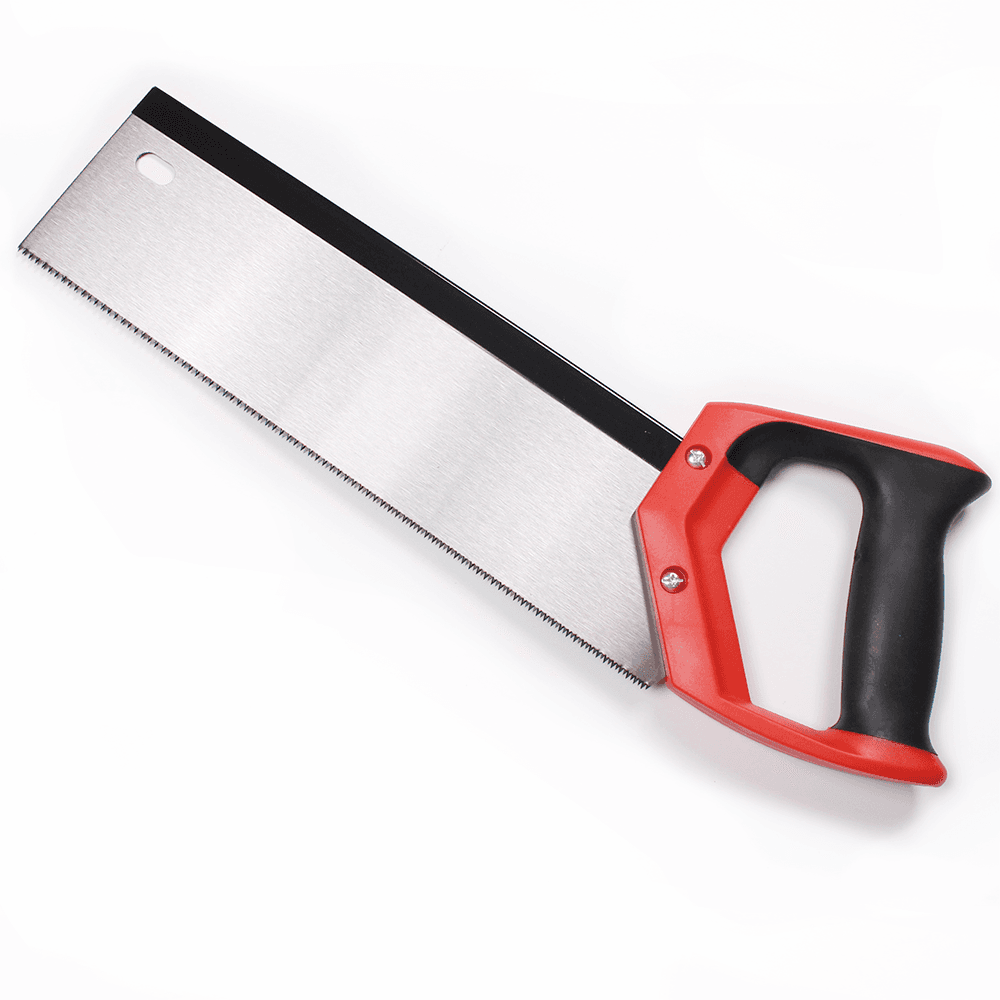
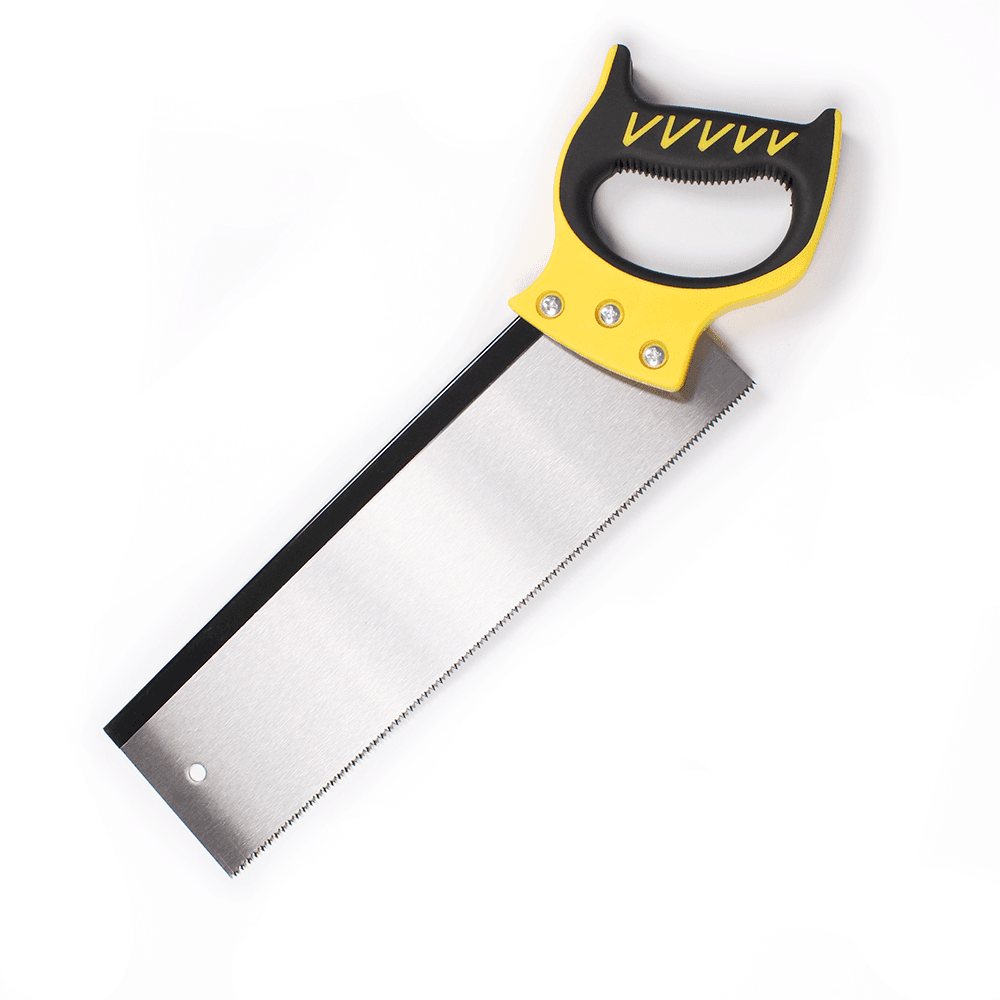
From the visible product details, this saw appears to use a rigid straight steel blade with fine teeth along one edge and a closed, ergonomic handle in black and yellow plastic or rubberized plastic. That combination points to general-purpose cutting of boards, dowels, plywood, and similar soft construction materials. It is the kind of tool chosen when the operator needs a simple, lightweight cutter that does not depend on power, batteries, or complicated maintenance.
Quick read: what stands out
If you are comparing hand saws quickly, the main visible strengths of the C-3019 Back Saw are straightforward:
The blade looks like stamped steel with a brushed or polished finish.
The toothed edge is fine, which usually supports cleaner manual cuts in wood and other softer stock.
The handle is contoured with finger grooves and a closed-loop grip, which should help with hand control during repetitive use.
Three visible fasteners suggest a mechanically assembled handle-to-blade joint rather than a purely friction-fit design.
A small hanging hole near the blade end makes basic storage easier, which sounds minor until you are trying to keep a bench organized.
That is the kind of feature set buyers often want when they are comparing a durable jobsite hand tool against a cheaper, looser-feeling alternative.
How this kind of back saw is made
The exact materials are not confirmed here, so it is better to stay with what can be reasonably inferred. The blade appears to be a flat steel part, likely stamped and then ground or sharpened along the toothed edge. That is a common manufacturing route for general-purpose manual saws because it keeps the part simple and economical while allowing enough rigidity for controlled cutting.
The handle looks like an injection-molded polymer assembly, possibly with a black inner grip and yellow outer shell or accent sections. The shape is more important than the color. A closed handle with finger grooves gives the user a consistent hand position, and the surrounding guard area near the blade mount usually helps stabilize the transition from grip to cutting line.
The visible screws or bolts indicate a mechanical fastening approach. For buyers, that can be a useful detail because it suggests serviceable assembly and a more secure blade-to-handle attachment than a tool that feels loosely bonded together. Still, it would be a mistake to assume anything beyond that. Blade thickness, steel grade, heat treatment, and whether the blade is replaceable are not visible and should not be guessed at.
Why the handle design matters more than it first appears
A hand saw can look ordinary on a catalog page and still perform very differently in the hand. Handle geometry drives a surprising amount of user experience. The C-3019 Back Saw’s molded closed grip and finger grooves suggest a tool meant to be held with confidence, especially during straight cuts or when the operator has to maintain pressure over a longer stroke.
That matters in carpentry and trim work because a saw is often judged by how little it asks the user to fight it. If the grip is awkward, even a sharp blade becomes tiring. If the grip sits naturally in the palm, the cut line is easier to hold, especially for intermittent work where operators may not use the tool all day but still want consistent control.
There is a practical caution here: a comfortable grip does not automatically mean the tool is suitable for heavy-duty structural lumber. The visible design reads more like a general-purpose manual cutter than a specialty framing saw. Buyers should match the saw to the job rather than assuming any fine-tooth hand saw will handle every wood-cutting task equally well.
Where a fine-tooth manual saw usually fits best
Fine-tooth saws are often chosen for cleaner cuts in wood, trim, and light construction stock. That usually means:
finish carpentry
basic woodworking
site trimming of boards or dowels
small repairs and maintenance work
sheet goods where a cleaner edge is preferred over a very fast cut
The C-3019 Back Saw’s visible blade profile and tooth style fit that general category. It looks like the sort of tool kept within reach for quick corrections, fit-up work, and light cutting tasks where a power saw would be inconvenient or excessive.
That said, a buyer should be careful about overextending the tool’s use case. The product information suggests possible pruning-type use only in the broadest sense of a manual cutter, but that is not confirmed from the image. If the blade was not designed for plant material or wet outdoor service, then using it that way could shorten service life or produce poor cutting behavior. In procurement terms, “general-purpose” is not the same as “all-purpose.”
Selection criteria buyers should actually check
When evaluating a saw like this, the useful questions are practical rather than glamorous.
First, consider the tooth pattern and the smoothness you need. Fine teeth usually favor finish quality and control, while coarser patterns prioritize faster stock removal. Since the tooth count is not provided, buyers should confirm whether the saw is intended for crosscutting, general wood cutting, or a narrower task.
Second, look at the handle fit. A contoured closed grip is a good sign, but a real judgment should be made with gloved and ungloved use if the tool will be handled on site. A handle that looks ergonomic on a screen can still be too narrow, too slick, or simply not sized for a particular user base.
Third, check the blade-to-handle interface. The visible three-fastener assembly is a plus for many users because it suggests a firmer build. Still, the important question is not just how many screws are visible, but whether the joint stays tight after repeated use and occasional jobsite abuse.
Fourth, look at storage and basic handling. A hanging hole may seem minor, but tools with easy storage tend to stay cleaner and are more likely to be returned to the same place, which matters in shared workshops.
Common mistakes when sourcing this type of tool
One common mistake is treating manual saws as commodity items with no performance difference. In reality, handle comfort, blade stiffness, and tooth geometry can change the user experience quite a bit. Another mistake is assuming the visible finish tells the full story. A polished blade may look refined, but it does not reveal hardness, edge life, or whether the teeth are designed for repeated resharpening.
A second sourcing error is buying only on appearance when the end user’s work is not clearly defined. A saw that performs well in trim carpentry may disappoint in rough framing, and a saw suited to dry interior wood may not be the right choice for damp outdoor conditions. If the application is uncertain, it is worth asking for more specific use guidance before committing volume.
Finally, do not assume the ergonomic grip means soft-touch overmolding or vibration reduction. Those features are not verified here. The handle does look shaped for comfort, but visible shape alone should not be turned into a spec sheet claim.
Buyer-facing advice for procurement and product teams
If you are sourcing a tool like the C-3019 Back Saw for resale, bundling, or internal use, the best approach is to verify the handful of details that affect field acceptance. Ask for blade length, tooth pitch or TPI, steel specification, and whether the blade is replaceable. If the supplier cannot confirm those items, that is a signal to keep the product positioned as a general manual saw rather than a precision cutting solution.
For product teams, the visible design language is solid: two-tone grip, simple blade, obvious hanging point, and a no-nonsense form factor. That is usually enough for a utility-focused SKU, provided the descriptions stay within what is actually known. Overstating performance on manual tools tends to backfire because end users notice quickly when a saw does not behave as advertised.
FAQ
Is the C-3019 Back Saw for woodworking only?
It appears suitable for wood and similar soft materials, but the supplied details do not confirm a narrow specialty category. It is safest to describe it as a general manual cutting tool.
Can the blade type be confirmed from the image?
Only partly. The blade appears to be flat steel with fine teeth on one edge, but exact steel grade, hardness, and tooth specification are not confirmed.
Does the handle look comfortable for long use?
The contoured closed grip and finger grooves suggest a comfort-oriented design, though actual comfort depends on hand size, glove use, and the user’s cutting style.
Is this a heavy-duty saw?
Nothing in the visible information supports that claim. It looks more like a practical general-purpose hand saw for light construction and workshop tasks.
What to do next
If you are evaluating the C-3019 Back Saw for catalog placement, internal procurement, or kit packaging, the next step is to confirm the missing technical details before writing a final specification. The visible design is straightforward and usable, but a serious buyer will still want to know the blade dimensions, tooth profile, and material details before making a firm decision.
For a tool in this category, that is usually the difference between a safe general listing and an overpromised one. The saw itself looks like it was designed for ordinary, repeatable work. Your sourcing decision should be just as disciplined.